The B2B Growth Engine: How to Combine Tech, RevOps, and Sales Execution Without the Chaos

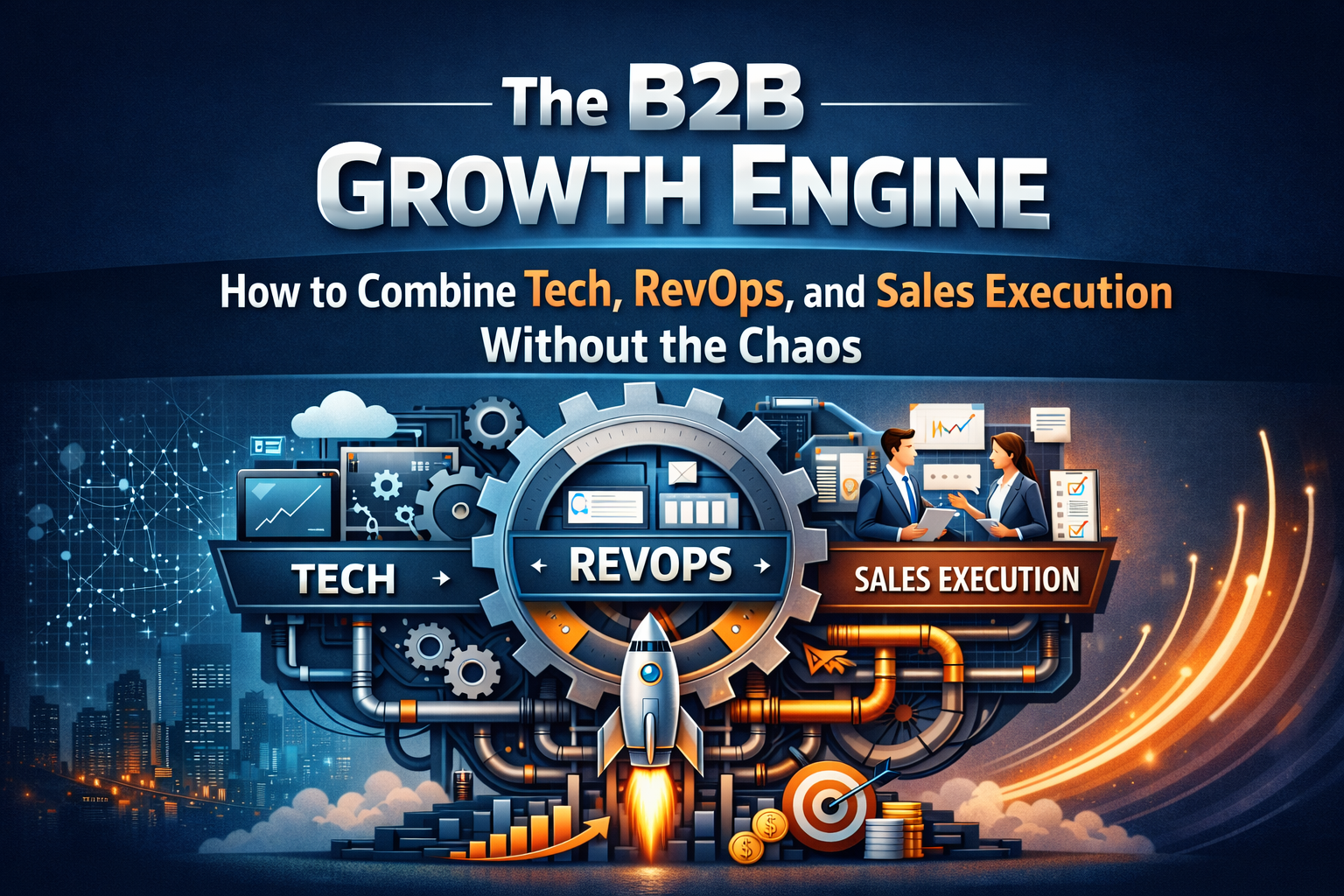
Most B2B growth programs stall for one reason: execution is fragmented. Marketing runs campaigns. Sales runs outreach. Ops tries to keep tools working. Leadership wants pipeline. Everyone’s busy—yet results stay inconsistent.
The companies that scale don’t “do more marketing.” They build a growth engine: a connected system where data, process, and execution reinforce each other.
Here’s how to build one.
Why B2B growth breaks
If your growth feels random, you’re probably dealing with at least one of these:
- Your tech stack isn’t integrated, so attribution and lead routing are unreliable.
- Sales and marketing disagree on “qualified”, so leads get wasted.
- Your CRM is a reporting tool, not an operating system, so the team works in Slack instead of in process.
- Messaging is too broad, so outreach and content don’t convert.
Growth doesn’t fail because people aren’t trying. It fails because the system isn’t designed to produce predictable output.
The Growth Engine model (simple, but not easy)
A scalable B2B growth engine has five connected layers:
1) ICP & Offer Clarity
If you can’t define who you win with and why, everything downstream becomes expensive. Tight ICP beats “bigger top-of-funnel” every time.
2) Messaging That Performs in Outbound and Inbound
If your message can’t earn meetings via outbound, it won’t convert via inbound. Your positioning must be clear enough to work in a cold email—then it will work everywhere.
3) Funnel Architecture & Lifecycle
Lead stages, scoring, routing, follow-up windows, and handoffs must be defined. If you don’t design it, it becomes accidental.
4) Tech + RevOps Integration
CRM, email, calendar, ads, website forms, tracking, and reporting should work as one system. No more “we think this is working.”
5) Execution Cadence
Weekly pipeline reviews, conversion monitoring, campaign iteration, and enablement updates. Growth needs a rhythm, not a one-time push.
The fastest way to fix it: start with the bottleneck
The mistake is trying to “upgrade everything.” The smart move is isolating the constraint.
Common constraints:
- Not enough qualified meetings
- Leads don’t convert to sales conversations
- Sales cycle is too long
- Close rate is too low
- Pipeline is fine—but forecasting is unreliable
When you identify the constraint, you can build a targeted plan with compounding impact.
What this looks like in real execution
A well-built growth engine usually includes:
- A tight ICP + segmentation model
- A clear offer ladder (entry → core → expansion)
- A unified funnel with defined stage exits
- Outbound + inbound campaigns running from one message architecture
- Dashboarding tied to pipeline outcomes (not vanity metrics)
- Sales enablement that supports the reality of the sales cycle
The MYNT Partners approach
At MYNT, we don’t treat growth like a marketing problem. We treat it like an operating system—combining technology transformation + sales growth execution so your pipeline becomes predictable.
If growth feels inconsistent right now, the system is talking.
The question is: will you diagnose it and rebuild it—or keep pushing harder inside the same structure?
Call to action: Want the shortest path to clarity? Book a Growth Call and we’ll identify your primary bottleneck, map the fixes, and outline a 30–90 day execution plan.


.svg)